
Best Apps for Learning Vietnamese

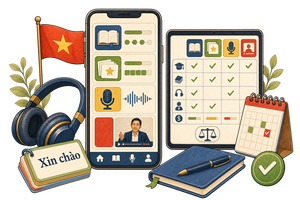
Illustration of Vietnamese learning apps

Apps can help you build vocabulary, practice pronunciation, and stay consistent with short daily sessions. They are not ideal as a complete plan, because real Vietnamese is fast, contextual, and full of reductions and everyday phrasing you will not meet in an app. Not all language apps are bad, but they do require some strategy to be effective.

This page helps you pick the right app type for your goal and shows how to combine apps with real content without getting stuck in endless lessons.

On this page

Choosing an App

There is not one app that does everything perfectly. We recommend to use a few apps for specific purposes, rather than trying to find one that does it all. Which apps you need depends on your level and goals.

Your goal Best tool What to look for Explore
Start from zero Guided course app Clear progression, lots of native audio, built-in review Course apps
Remember vocabulary Spaced repetition Audio + example sentences, fast daily reviews, easy editing Flash cards apps
Improve pronunciation Audio-first drills Slow/repeat controls, short clips, tone-focused listening Pronunciation apps
Improve reading Graded reading Levelled texts, glosses/lookup support, optional audio Reading apps
Speak with feedback Online classes Corrections in context, pronunciation notes, practical phrases Tutoring apps

Best Practices

Apps vary a lot, so the best choice depends on what you want to improve right now. Start by matching the app to your goal, then keep your setup simple. If the app includes listening or speaking, make sure you are following the right dialect. Northern and Southern pronunciation differs, which affects what you hear and learn.

For pronunciation, look for lots of native audio with slow playback and practicing. The best apps make you listen first, then repeat and compare. Pronunciation scoring can be helpful, but it is not perfect. Use it as a signal and verify by listening closely to native audio.

Beginners usually do better with a guided course path and built-in review. Lesson libraries are more useful once you already know your gaps. Whatever you pick, review is important. Spaced repetition and short daily sessions are what turn recognition into usable vocabulary, especially when the app teaches real sentences instead of isolated word lists.

Finally, focus on consistency. Offline downloads, fast audio replay, and a clean interface make it easier to study daily. Also check what is free versus paid. If core practice like audio or review is locked behind a paywall, it may be hard to stick with long-term.

Common Mistakes

Apps are great to get started and to fill specific gaps, but there also some common pitfalls to look out for.

App hopping

Switching tools can feel productive but resets your momentum. Pick one or two apps that fit your goals and stick with them for at least a month.

Ignoring tones early

It's hard hard to learn tones once you already started speaking. Train your ear from day one with listening-first drills and repeated short audio.

Words without context

Isolated word lists do not teach natural usage. Prefer example sentences, short dialogues, and words saved from content you watched or read.

Trusting scores too much

Use scoring from apps as a signal, not as an absolute measure. Compare yourself to native audio and get occasional human feedback to make sure you are on the right track.
Explore More

Want to Discover More?

Explore our hand-picked study resources in the library. Browse the full library with filters for dialect, learning-goal and more, to find the best resources for your study goals.

Want to stay in the loop?

Subscribe to our newsletter for the latest resources. We promise we won't spam you, you will receive one email a month at most.