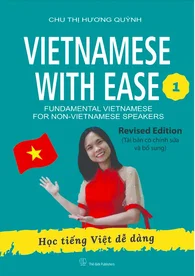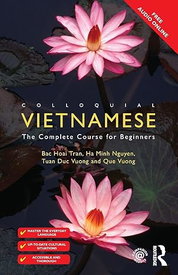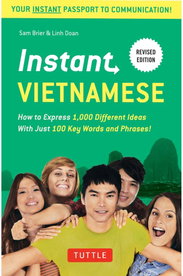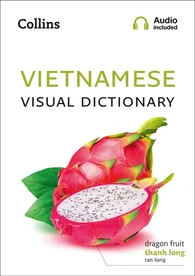
Best Books for Learning Vietnamese

Illustration of Vietnamese learning books

Vietnamese books are one of the fastest ways to get a structured path for grammar, dialogues, and reading. This page focuses on physical Vietnamese-learning books in our library and groups them by goal, such as beginner books, workbooks, phrasebooks, and dictionaries.

On this page

Choosing a Book

Match the level

Quick test: if you understand most of a sample dialog, it’s a good fit. Beginners need small steps and lots of repetition. Intermediate learners usually need longer texts and more natural vocabulary.

Stick to one dialect

Prefer materials that match where you’ll use Vietnamese, such as Hanoi or Saigon. Consistency helps pronunciation and everyday vocabulary.

Tone and vowel clarity

Look for clear tone explanations and strong vowel practice with many short examples you can imitate.

Practical dialogs, not just lists

Strong books teach reusable sentence patterns and natural conversations, such as greetings, ordering, directions, and daily routines.

Exercises with feedback

For self-study, prioritize lots of drills and an answer key or clear model answers. Without feedback, it’s easy to repeat mistakes.

Vietnamese script early

Avoid books that rely heavily on romanization. You want Vietnamese spelling and tone marks visible from the start.

Course book and reference book

Course books build habits through lessons and repetition. Reference books explain details when you need a clear reason or a deeper explanation.

Usability for daily study

Clear fonts, uncluttered pages, and easy navigation matter. If a book is annoying to use, reviewing becomes harder.

Match your main goal

If your goal is speaking, choose dialog-heavy books and pattern drills. For travel, choose a phrasebook. For reading, choose graded readers. For accuracy, add a grammar reference and a good dictionary.

FAQ

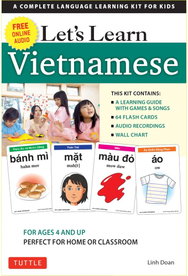
Start with a beginner course book, not a phrasebook or a dictionary. A good beginner course book has short lessons, lots of example sentences, practical dialogs, and exercises that make you produce Vietnamese. An answer key matters if you are studying alone. If you are unsure, filter the library by beginner level and pick a book that is clearly designed for self-study.

A textbook is your main path. It introduces grammar, dialogs, and core vocabulary in a sequence. A workbook is extra practice. It reinforces what you learn in the textbook with more drills and writing or reading exercises. A phrasebook is for travel and emergencies. It can be useful fast, but it will not build a strong foundation by itself. If you only buy one, choose a beginner textbook. Add a workbook later if you want more repetition.

It matters most for pronunciation guidance and for any audio that comes with the book. Written Vietnamese is largely shared nationwide, but pronunciation and some everyday vocabulary differ by region. One key difference is that many Southern accents pronounce the hỏi and ngã tones the same, while Northern speech often keeps them more distinct. If you have family, a partner, or a place you spend time, match that dialect for consistency.

A book alone is rarely enough for pronunciation and listening, because Vietnamese is tonal and sound differences matter. Ideally, use audio from the book if available, or pair it with other native materials, so you can hear tone and vowel differences and practice speaking aloud. Many mainstream Vietnamese course books are designed for self-study and include structured dialogs and a full answer key. Some also provide companion audio. If your chosen book has no audio, pair it with consistent listening practice and occasional feedback from a tutor or native speaker.

You do not need to master tones first, but you should learn the basics early because tone marks change meaning. Vietnamese uses a Latin-based script with diacritics, and tone marks are a core part of spelling and meaning. Practical approach: learn the alphabet and diacritics, learn the tone marks, then start the book and keep revisiting tones as you practice with real words and sentences.

Use a small routine per lesson. Read the dialog, say it out loud, do the exercises, then review the key sentences again the next day. Don't try to memorize entire word lists. Instead, save a few high-utility sentences and reuse them with your own variations. If the book has an answer key, check it immediately. If it doesn't, keep your writing output small and focus more on speaking and comprehension until you can get feedback.

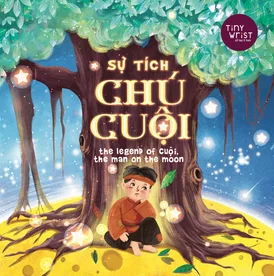
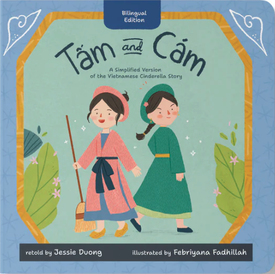
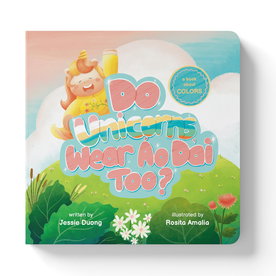
Yes, but timing matters. Graded readers are best when they are truly level-controlled, with limited vocabulary and short sentences. They help you build reading speed without constant dictionary use. Children's books can help with repetition and simple patterns, but some are poetic or culturally dense and can feel harder than expected. If you are still decoding the script, start with very short texts and reread the same story multiple times instead of constantly switching books.

Move to an intermediate book that increases dialog length and introduces more natural speech and connectors, then begin mixing in real Vietnamese content. At this stage, a reference grammar and a good dictionary become more useful, because you'll notice patterns and exceptions while reading and listening. Keep your dialect consistent, and prioritize materials that force comprehension and production, not only explanations.
Explore More

Want to Discover More?

Explore our hand-picked study resources in the library. Browse the full library with filters for dialect, learning-goal and more, to find the best resources for your study goals.

Want to stay in the loop?

Subscribe to our newsletter for the latest resources. We promise we won't spam you, you will receive one email a month at most.